
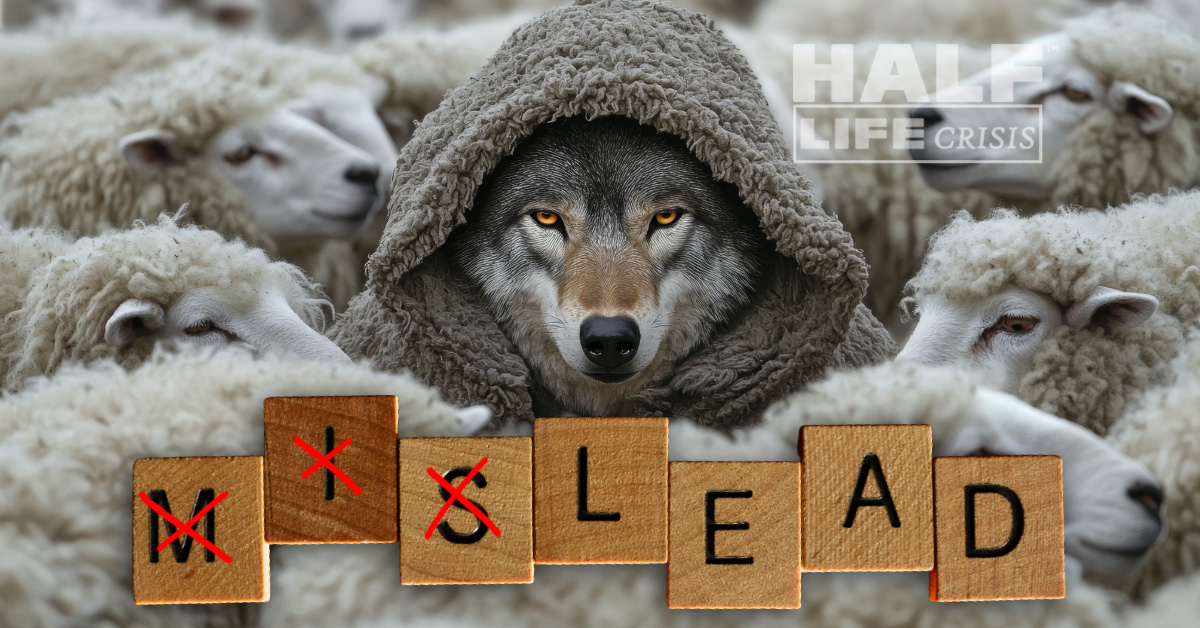
Redacting truth turns a correct answer counterintuitive. Add visceral loyalty, and cognitive dissonance follows. Let’s explore this propaganda tactic.
Part I: The Mechanics of Manipulation
Bipartisanship is often misused. It doesn’t mean we agree on opinions — it means we agree on facts. In pragmatic conversations, I urge folks to delete phrases like “I believe,” “I think,” or “in my opinion.” Why? Because opinions aren’t measurable. We’re all entitled to them, but not to our own facts. Solutions require facts. Opinions often lead to miscalculations.
Sticking to facts saves time — but it might contradict our worldview. That’s why people gravitate to echo chambers: they’re cozy, and if folks are insecure, their feelings remain unchallenged. Those who seek our agreement through manipulation won’t give us full context — just a bunch of easy-to-remember talking points. The truth is inconvenient for them. Instead, they’ll turn our virtue into a bias, then make that bias visceral enough to trigger our actions — even without our awareness.

It’s insidious, and it works across the political spectrum. If we’re passionate about religion, politics, activism, art, climate, sports — anything — it’s easy to turn that virtue into an exploitable bias. Doesn’t matter if we’re the “good guy” or “bad guy.” The real question is: are we willing to burn bridges to defend that position?
So how do we know which stance is correct? Simple: it doesn’t dehumanize another group. It’s not divisive — even if it claims to unify a particular tribe. The truth yields facts regardless of opinion. That’s inconvenient for anyone trying to weaponize our biases, whether they cast us as defender or opposition.
We’re all capable of empathy or cruelty, depending on what’s normalized around us. That’s why it’s okay — even necessary — to look outside our bubble and face the group being demonized. The answer is almost always this: we are more similar than different. Getting there isn’t a straight line. It’s a winding road. The human mind is simple, but its wiring is complex.
AUTHORITARIANISM AND PROPAGANDA The Puppet Master Tools
Revised Edition! Available on Paperback and Hardcover
Part II: Apply This to the USA
The political division in the United States isn’t new — but it’s evolved. It now mirrors countries that failed to act quickly enough to normalize the exploitation of biases. The goal isn’t to change our political position. It’s to ask: Is the person in our party redacting the truth?
Once that question is answered, issues like gerrymandering, party loyalty, and partisan voting begin to dissolve. Most people choose a party for reasons far less scientific than actual knowledge of the doctrines they claim to support.
How do we know? Look at the wedge issues they defend — often redacted. When full context is revealed, one of two things happens: they accept it and shift their stance, or they double down out of fear. Why? Because admitting we were wrong takes immense courage. But here’s the truth: it’s okay to be wrong. It’s part of learning. Rectifying an error makes us stronger than clinging to it.
Bonus points: when we defend the correct position, we don’t have to make excuses for our party’s setbacks or cherry-pick the parts that don’t hurt our feelings. We all face those choices eventually. It’s not a matter of if, but when.
I won’t delve into geopolitics here, but regardless of the scope of any quarrel, ask yourself: Who wins when we are divided?
Let me illustrate with a cockfight. Two creatures, pinned against each other, fighting to the death. Who wins? Neither. Even the survivor must fight again. The real winners are the ones who orchestrated the fight. They cheer from the sidelines, but they won’t save the fighters. Real life is just as insidious — except that the roosters wear merchandise and proudly chant, and the ones controlling the ring wear suits and ties.
WOKE & PROUD The Charlatans' Inconvenience
Available worldwide on eBook and Paperback
Part III: Bottom Line
Our country is divided because — from everyday folks at the kitchen table to politicians in exalted positions — many advocate for an “us versus them” mentality. It might feel tactically correct, but it’s strategically detrimental. We are more similar than different.
If you ever catch yourself making excuses for a political party — or for any person — ask: Has the truth been redacted to me? Let me save you time: the answer is yes.
So what can we do today? Hold everyone accountable using a metric of fairness and humanity. It’s okay to disagree with a political party. I’m an independent because of that. It’s liberating. But even if we don’t disavow our party, remember this: while we can’t change the past, our decisions today will shape the future.
Make the correct choice while you still have the chance. HLC
 About the Author: J. Marcelo "BeeZee" Baqueroalvarez
🔗 Connect & Learn More: Visit Marcelo's comprehensive landing page for his extended bio, social links, consulting form, and more.
J. Marcelo "BeeZee" Baqueroalvarez is the Founder of Half Life Crisis™, a unique father-daughter collaboration dedicated to the relentless pursuit of intellectual honesty, critical thinking, geopolitical strategy, and meaningful art. Marcelo is the recognized author of the essential reads, Authoritarianism & Propaganda and Woke & Proud, driving challenging conversations worldwide. When not publishing, Marcelo utilizes his strategic insight in technology and business as the founder of BeeZee Vision, LLC™, which includes BZVweb™ Automated Web Services and Info in Context™ strategic consulting.
Continue the Conversation
We encourage intellectual debate! To maintain a clean, focused reading experience, comments have been disabled on this article. Share your insights, counterarguments, or continue the discussion on your preferred social platform: